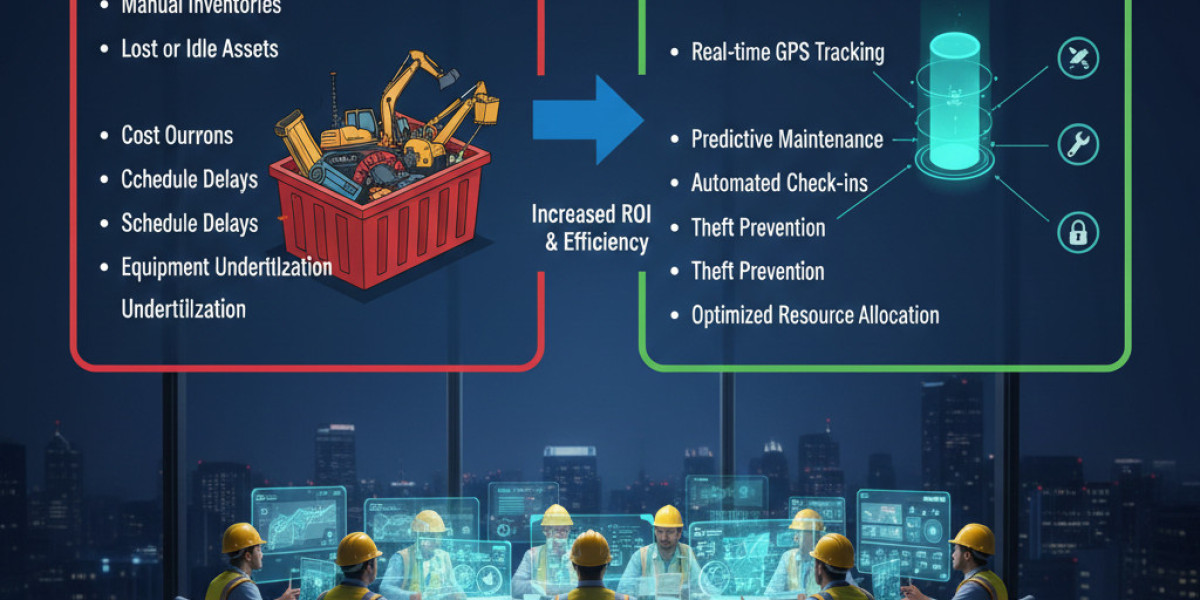

High-value construction equipment represents one of the largest capital investments on any project. Excavators, cranes, graders, compactors, and specialty machines often cost hundreds of thousands of dollars each. Beyond the purchase price, these assets carry financing costs, insurance premiums, fuel expenses, maintenance requirements, and operator labor. When visibility over such equipment is limited, risk increases quickly.
Precision tracking technology has changed how contractors protect and manage these investments. With construction asset tracking software, companies gain accurate insight into asset location, utilization, and condition. This visibility supports tighter operational control and reduces the uncertainty that can undermine both schedules and budgets.
The Financial Weight of High-Value Assets
Construction equipment does more than move material. It directly influences project timelines, labor efficiency, and overall profitability. A single crane outage can stall an entire phase of construction. A missing excavator can delay site preparation. High-value machines serve as productivity multipliers, which makes oversight essential.
The financial exposure tied to these assets includes:
Depreciation and capital financing
Insurance and compliance costs
Fuel consumption
Preventive and corrective maintenance
Idle time expenses
Theft or unauthorized usage risk
Managing this exposure requires more than spreadsheets and manual check-ins. Precision tracking introduces structured oversight that aligns asset control with financial planning.
Why Traditional Tracking Methods Fall Short
Historically, equipment location and usage were tracked through phone calls, sign-out sheets, or informal communication between supervisors. While these methods worked in smaller operations, they become unreliable as fleets expand across multiple job sites.
Manual tracking presents several challenges:
Delayed updates on asset movement
Inaccurate reporting of engine hours
Limited documentation for audits
Difficulty reconciling owned versus rented equipment
Increased risk of misplaced or underused machinery
As project complexity increases, these gaps create operational friction. Managers spend time searching for equipment rather than directing crews.
Establishing Real-Time Asset Awareness
Precision tracking technology addresses these gaps by delivering continuous location data. Construction asset tracking software consolidates GPS information, movement history, and operational metrics into a centralized dashboard.
Real-time awareness allows project managers to:
Confirm asset location instantly
Verify site assignments
Monitor unauthorized movement
Identify idle equipment
Coordinate transfers between projects
This visibility reduces uncertainty. When managers know exactly where each asset is positioned, they can allocate resources with confidence.
Protecting Against Theft and Loss
Theft remains a significant concern for construction firms, particularly for high-value portable equipment. Recovery becomes difficult without accurate tracking information. Precision tracking strengthens security by providing geofencing capabilities and movement alerts.
If an asset moves outside designated zones or operates outside scheduled hours, automated notifications can be triggered. This immediate awareness supports faster response times and improves recovery likelihood.
Beyond theft, tracking systems reduce the chance of accidental loss. Equipment transported between sites without proper documentation can create confusion. Centralized tracking eliminates ambiguity by recording movement history clearly.
Improving Utilization for Maximum Return
High-value equipment must generate consistent productivity to justify its cost. Underutilized machinery reduces return on investment and increases the burden of fixed expenses. Without measurable utilization data, these inefficiencies remain hidden.
Construction asset tracking software provides detailed insight into active hours, idle time, and movement patterns. Managers can analyze which machines are consistently engaged and which remain idle for extended periods.
Balancing utilization improves operational efficiency. Assets can be reassigned proactively, reducing rental dependence and ensuring that owned equipment delivers measurable value.
Supporting Accurate Maintenance Planning
Maintenance strategies depend on reliable usage data. Service intervals based solely on calendar time may fail to reflect actual operating demands. Precision tracking technology records engine hours and performance metrics, which align maintenance scheduling with real usage.
This integration supports:
Timely preventive service
Reduced mechanical wear
Extended asset lifespan
Improved warranty compliance
Fewer unexpected breakdowns
By combining location and usage data, contractors maintain both operational awareness and mechanical reliability.
Enhancing Multi-Site Coordination
Large construction firms frequently operate across several projects simultaneously. High-value assets may rotate between sites depending on workload and project phase. Coordinating these movements requires structured communication.
With centralized oversight, managers gain a complete view of fleet distribution. Instead of relying on individual site reports, leadership can monitor asset deployment through one platform. This clarity simplifies planning and reduces misallocation.
Coordinated asset movement supports smoother project transitions. When one phase concludes, equipment can be redirected promptly to the next priority site.
Strengthening Financial Reporting and Forecasting
Precision tracking does more than improve field coordination. It supports financial clarity. Equipment-related costs influence budgeting decisions, project bidding, and long-term capital planning.
Accurate data enables analysis of:
Utilization rates per project
Equipment performance trends
Rental substitution opportunities
Lifecycle cost comparisons
Fuel consumption patterns
When leadership has access to verified operational metrics, financial forecasting becomes more reliable. Capital investment decisions are grounded in measurable performance data rather than assumptions.
Increasing Accountability Across Teams
Transparency encourages disciplined asset management. When movement and usage are recorded automatically, responsibility becomes clearer. Site supervisors can verify asset presence and monitor productivity without relying solely on verbal updates.
Operators also benefit from structured tracking. Usage data highlights operational patterns that may require additional training or adjustments. Clear metrics create opportunities for performance improvement without relying on anecdotal feedback.
Accountability strengthens collaboration between field teams and office management. Questions about equipment allocation can be answered quickly through verified data.
Adapting to Growing Project Complexity
Modern construction projects demand higher levels of coordination. Infrastructure developments, industrial facilities, and commercial builds involve overlapping schedules and large fleets of specialized equipment. Precision tracking technology provides the structure necessary to manage this complexity.
As fleets expand, centralized oversight prevents fragmentation. Managers can identify patterns, respond to changing demands, and maintain alignment between equipment availability and project milestones.
Construction asset tracking software becomes a foundational tool for scaling operations responsibly.
Building a Culture of Data-Driven Management
Technology adoption succeeds when organizations integrate data into daily workflows. Dashboards, reports, and alerts should guide scheduling meetings and operational reviews. When teams rely on accurate metrics consistently, decision making becomes faster and more confident.
Precision tracking shifts asset management from reactive adjustments to proactive coordination. This cultural shift supports long-term operational stability.
Conclusion
Managing high-value equipment requires more than physical oversight. It demands structured visibility, measurable utilization insight, and reliable documentation. Precision tracking technology addresses these needs by centralizing asset intelligence and delivering real-time awareness.
Through construction asset tracking software, contractors protect capital investments, improve utilization, strengthen security, and support accurate maintenance planning. The result is greater operational control and stronger financial performance.
As project demands continue to intensify, precision tracking will remain essential for companies committed to protecting their most valuable assets while maintaining schedule discipline and profitability.








