
Cinematic Audio Tricks Every Creator Should Know
Whether you’re crafting a film, a VR experience, or an immersive interactive audio story, cinematic audio can elevate your work from ordinary to unforgettable. It’s more than sound effects and background music — it’s a carefully designed atmosphere that draws listeners in, evokes emotions, and enhances narrative impact.
Platforms like AudioVR use cinematic 3D audio to immerse listeners into story worlds in ways that traditional audio simply can’t match — and understanding these techniques can help every creator produce richer, more engaging audio content.
Here are powerful audio tricks every creator should know:
? 1. Layer Sound for Depth and Emotion
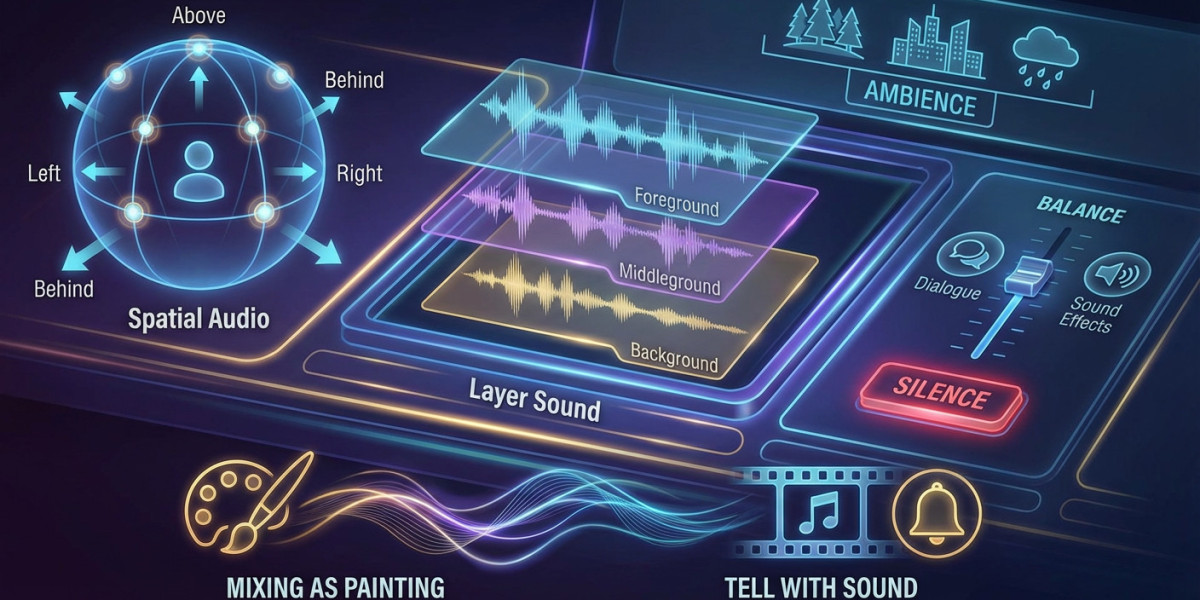
Great cinematic audio isn’t a single track — it’s a multi-layered soundscape. Think of audio in three layers:
Foreground sounds: Dialogue or primary sound elements
Middleground sounds: Key effects that give context
Background ambience: Atmosphere that fills space
Layering helps achieve a three-dimensional feel where every element supports the others without overwhelming the listener. For example, footsteps, rustling leaves, and distant background noise together make a scene come alive.
This layering technique is used in immersive audio platforms to help listeners visualize scenes with sound alone.
? 2. Use Spatial Audio for Realism
Cinematic audio isn’t just loud or quiet — it’s positioned. Spatial audio gives each sound a place in the 3D world so listeners can tell where sound is coming from — left, right, above, or behind.
In platforms like AudioVR, sounds like footsteps or whispers appear to exist around the listener, not just in front of them. That sense of space enhances immersion and helps guide attention.
For creators, tools like binaural audio or 3D mixing can achieve this effect even outside VR.
? 3. Craft Ambience That Tells a Story
Ambient sound should do more than fill silence — it should reinforce context. The hum of a spaceship engine, the distant sound of market chatter, or the whisper of wind through trees all set mood and tone.
Effective ambience:
Anchors the listener in a world
Builds emotional tension or calm
Supports narrative without dialogue
Treat ambience as a character within your audio landscape, not just background noise.
? 4. Balance Dialogue and Sound Effects
Clear dialogue is essential, but over-processing speech can make audio unnatural. Likewise, violent sound effects won’t land if they overpower the words conveying the story. The trick is balance:
Keep dialogue intelligible
Let effects underscore, not drown out
Use EQ and compression to fit all elements in harmony
In immersive experiences like AudioVR, sound designers ensure voice and effects coexist — often using dynamic mixing — so every scene feels cinematic and emotionally coherent.
?️ 5. Use Silence Strategically
Silence can be more powerful than any sound. A sudden drop in audio— no music, no ambience — can:
Build dramatic tension
Make the next sound hit harder
Shift emotional focus
Great creators know when to remove sound as much as when to add it.
? 6. Tell With Sound, Not Just Pictures
In cinematic storytelling, audio shouldn’t just accompany visuals — it should enhance narrative meaning. Think of audio cues as narrative signposts:
A distant bell signals a looming event
A subtle tone suggests danger
Music motifs represent characters or ideas
When you treat audio as a storytelling tool, listeners engage more deeply. Immersive audio platforms apply this principle by using sound to reveal clues, set mood, and support interactive choices.
? 7. Treat Mixing Like Painting
Mixing audio is like painting with sound — you balance color (tone), depth (reverb), and focus (EQ) to direct attention. Some tips:
EQ each sound so it occupies its own frequency range
Use reverb and delay to place sounds in a realistic space
Test mixes in different environments (headphones, speakers, etc.)
The better your mix, the more natural and cinematic your audio feels.
? Final Thoughts
Cinematic audio is not just an effect — it’s a craft. Whether you’re producing VR experiences, films, or interactive stories like those on AudioVR, understanding sound design principles can dramatically enhance immersion and emotional impact.
With layered soundscapes, spatial positioning, thoughtful ambience, and strategic mixing, you can create audio that doesn’t just accompany your content — it elevates it.