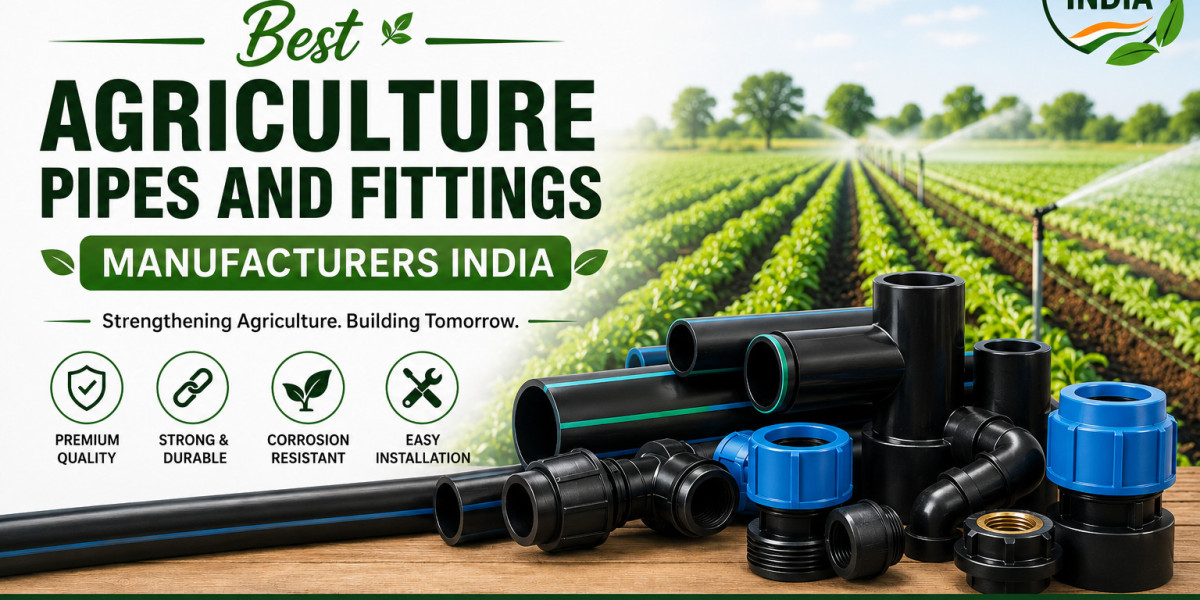

A delayed irrigation line installation in peak sowing season can wipe out an entire quarter’s planning. That’s exactly why buyers sourcing Agriculture Pipes And Fittings are no longer choosing suppliers based only on price sheets. They are checking wall thickness consistency, dispatch reliability, and whether the factory can maintain pressure-grade standards across every batch.
Most buyers learn this late.
A pipe that cracks after one summer cycle does more than damage crops. It damages dealer trust, replacement budgets, and future purchase orders. And yet, many procurement teams still approve suppliers after one video call and a PDF catalogue.
India’s agricultural irrigation market crossed USD 4.2 billion in 2024, driven by micro-irrigation expansion and rural infrastructure investment. Demand for dependable Agriculture Irrigation Pipes and PVC Irrigation Pipes keeps rising because farms are shifting toward water-efficient systems faster than many distributors expected.
The Specification Detail Most Buyers Skip While Sourcing Irrigation Pipes
Pressure Ratings Are Not Just Catalogue Numbers
Not every irrigation project needs the same pressure grade. A 2.5 kg/cm² pipe line used for low-pressure water movement behaves very differently from a 6 kg/cm² installation supplying long-distance agricultural fields.
Which means a supplier giving one generic recommendation for every use case usually hasn’t understood the application.
At the procurement level, this matters because under-rated pipes often fail at joints first. That failure rarely shows up during installation. It appears after temperature variation and repeated water hammer pressure cycles.
Common Types of Agriculture Irrigation Pipes
PVC Irrigation Pipes
Widely used for medium and large-scale irrigation systems because they resist corrosion and remain comparatively lightweight during transport.
HDPE Agriculture Pipes
Preferred in uneven terrain and underground installations where flexibility matters more than rigid alignment.
Column Pipes
Used mainly in borewell and submersible pump systems where vertical load strength becomes critical.
Fittings and Connectors
Elbows, tees, couplers, reducers, and threaded fittings determine how reliable the full irrigation network becomes over time.
Nobody tells you this, but inconsistent fitting dimensions cause more field complaints than the pipe itself.
UV Resistance Is Harder Than Buyers Assume
Northern India’s summer temperatures regularly cross 45°C in exposed agricultural zones. Pipes without proper UV stabilization start becoming brittle much earlier than expected.
A supplier who avoids discussing raw material formulation usually has something to hide.
5 Supplier Evaluation Criteria Procurement Teams Should Use
1. Ask for Batch Testing Records, Not Just Certifications
ISO certification matters. But batch-wise quality records matter more because they show production consistency.
A bad answer sounds like this:
“Testing happens internally. Reports are not shared routinely.”
That usually means documentation is weak or inconsistent.
2. Verify Raw Material Sourcing
Virgin PVC compounds perform differently from recycled blends, especially under pressure fluctuation.
Some suppliers quietly increase recycled material percentages when resin prices rise. Buyers discover it only after complaint rates increase.
3. Check Dispatch Capacity During Peak Agricultural Season
April to July creates supply pressure across the irrigation sector. Factories already operating near full capacity struggle with urgent orders.
A weak supplier response sounds like:
“We’ll try our best during season demand.”
That is not a production commitment.
4. Confirm Dimensional Accuracy Tolerance
Even a 1–2 mm variation can create joint leakage in large installations.
Most buyers focus on pipe length and diameter. Very few verify socket precision.
5. Understand Complaint Resolution Process
A supplier who says “we’ll handle defects case by case” does not actually have a policy. That becomes your problem after the shipment lands.
Good manufacturers define replacement timelines clearly before the first dispatch.
Why Reliable Agriculture Pipes Protect Dealer Margins
Reduced Field Failure Complaints
Dealer reputation drops quickly when irrigation systems fail during active crop cycles. Durable Agriculture Irrigation Pipes reduce emergency replacement costs and protect long-term customer retention.
Better Water Flow Efficiency
Properly manufactured PVC Irrigation Pipes maintain smoother internal surfaces, which reduces friction loss across long-distance water movement systems.
Studies from agricultural engineering institutes show optimized irrigation flow systems can reduce water loss by nearly 18% in certain crop applications.
Faster Installation Time
Consistent pipe dimensions help installers complete fitting alignment faster on-site. That cuts labour hours, especially in large farming clusters.
Lower Transportation Damage
Inferior pipes often crack during stacking and unloading before they even reach the field.
That cost rarely appears in supplier quotations. It shows up later in rejected inventory.
Longer Operational Life
Well-manufactured irrigation pipes typically maintain structural reliability for 8–12 years depending on environmental exposure and operating pressure.
Better Dealer Confidence During Expansion
Distributors entering new agricultural markets cannot afford unpredictable product performance. Reliable supply quality makes territory expansion less risky.
Why Haryana Has Become a Strategic Supply Zone for Agriculture Pipes And Fittings Manufacturers in India
Kundli, Sonipat in Haryana sits close to major logistics corridors connecting Delhi, Punjab, Rajasthan, and Uttar Pradesh. That changes freight economics more than many buyers realize.
A shipment delayed by even 48 hours during irrigation season can disrupt dealer fulfilment schedules across multiple districts.
That’s one reason many buyers now prefer working with Agriculture Pipes And Fittings Manufacturers in India located near North India transport networks. Access to highway infrastructure reduces transit uncertainty and improves dispatch turnaround.
Which means procurement decisions are increasingly tied to logistics reliability, not just factory pricing.
Demand for Agriculture Irrigation Pipes Manufacturers in India has also increased because government-backed irrigation expansion projects continue growing across semi-urban agricultural regions.
And yes, buyers searching for dependable PVC Irrigation Pipes Manufacturers in India are asking tougher technical questions than they did five years ago.
That shift is overdue.
What We’ve Learned Manufacturing Agriculture Pipes Since Day One
At Flowtek Pipes, we’ve worked with distributors, infrastructure contractors, wholesalers, and agricultural supply networks that cannot afford inconsistent material quality.
We manufacture irrigation piping systems with strict dimensional checks because we know a loose fitting in the factory becomes a leakage complaint in the field.
Back in 2021, we adjusted one of our compound stabilization processes after repeated feedback from dealers operating in high-heat farming zones across Rajasthan. The pipes passed standard testing already. But prolonged UV exposure in real field conditions told a different story. We changed the formulation anyway.
That’s the difference between selling products and actually listening to downstream failures.
Our facility in Kundli, Sonipat Haryana operates with ISO-certified manufacturing standards, and we continue investing in process consistency because repeat procurement depends on reliability, not presentations.
Send Us Your Requirement Before Peak Dispatch Season Starts
If you are sourcing Agriculture Pipes And Fittings for wholesale distribution, infrastructure projects, or private-label supply, send us:
Pipe size requirements
Pressure grade specifications
Estimated monthly quantity
Delivery location
Fitting requirements
We usually respond within one business day.
Determining our minimum order quantity (MOQ) is dependent on the specifications of the pipes and the destination of the order. Our bulk purchases are generally commercial order volumes. You can speak to our representatives either through our website or when you request a callback from our sales department.
Conclusion
Dependable suppliers are separating from opportunistic traders in the quickly developing Agriculture Pipes and Fittings industry. Buyers can avoid more expensive issues in the future when they check technical standards, logistics capability, and complaints monitoring first. The continual development of irrigation across India will allow procurement teams to focus more on manufacturers who are able to deliver consistent quality every time.
FAQ
What is the most important when selecting Agriculture Pipes And Fittings Manufacturers?
Things like the quality of the raw materials, the pressure rating, and the piping fittings each receiving sufficient spacing and are still able to order consistently after their product was delivered all mean more than the price advertised in the brochure. If the replacement complaints are made even once per crop cycle, the complaint means less than the quote.
Should PVC Pipes be used in high temperature Irrigation?
Yes. However, the pipes should have UV Stabilization. Some of the low cost suppliers have UV stabilization in minimal quantifies and that is visible after a bit of time in the sun.
How do irrigation pipe manufacturers in India handle bulk order spikes to match the irrigation cycle?
The best factories will actually plan and place their orders for raw materials months ahead of the peak irrigation season. Others are limited to poor quality materials and short notice purchasing that creates delays in shipping during the time when demand is greatest which is April to July.
How long do people expect PVC Pipes to last in irrigation?
These pipes are built to last 12. Years and should be replaced at normal operating conditions used with irrigation and agriculture. However, the quality of construction should also be monitored during the installation and management of the pressure in the system.
Why do traders usually go for the long established manufacturers of PVC Pipes?
The best supply management system has the most consistent products which is the whole point of the PVC pipes.








