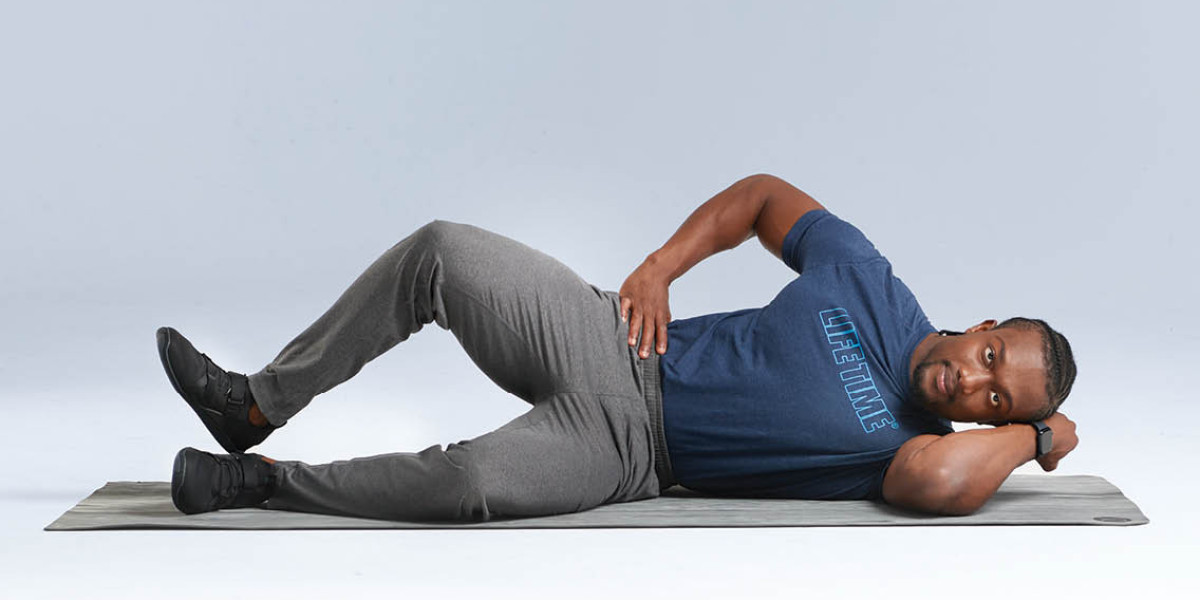

The clamshell exercise is a foundational lower-body movement widely used in fitness and rehabilitation settings. It is especially valued for its ability to activate the gluteus medius, a muscle responsible for hip stability and balanced movement. This exercise is low impact, simple to perform, and suitable for people at different fitness levels.
What Is the Clamshell Exercise
The clamshell exercise is performed while lying on one side with knees bent and feet together. The movement involves lifting the top knee while keeping the pelvis stable. This controlled action targets deep hip muscles that often remain underactive during daily activities.
Muscles Activated
Primary muscles involved include:
Gluteus medius
Gluteus minimus
Hip external rotators
Secondary support comes from the core and lower back muscles, which help maintain alignment during the movement.
Benefits of the Clamshell Exercise
Regular practice can:
Improve hip stability
Enhance pelvic control
Support proper walking and running mechanics
Reduce strain on knees and lower back
It is commonly recommended for people dealing with hip imbalance or poor posture.
Proper Technique
To perform correctly:
Lie on your side with hips stacked.
Bend knees at a comfortable angle.
Keep feet together and core engaged.
Lift the top knee slowly without rotating the hips.
Lower with control.
Controlled movement is more important than speed or range.
Common Mistakes to Avoid
Rolling the hips backward
Using momentum
Holding breath
Lifting the knee too high
Avoiding these mistakes ensures better muscle activation.
Conclusion
The clamshell exercise is a reliable and effective way to strengthen hip muscles and improve movement quality. When performed consistently with proper form, it supports long-term joint health and physical stability.








