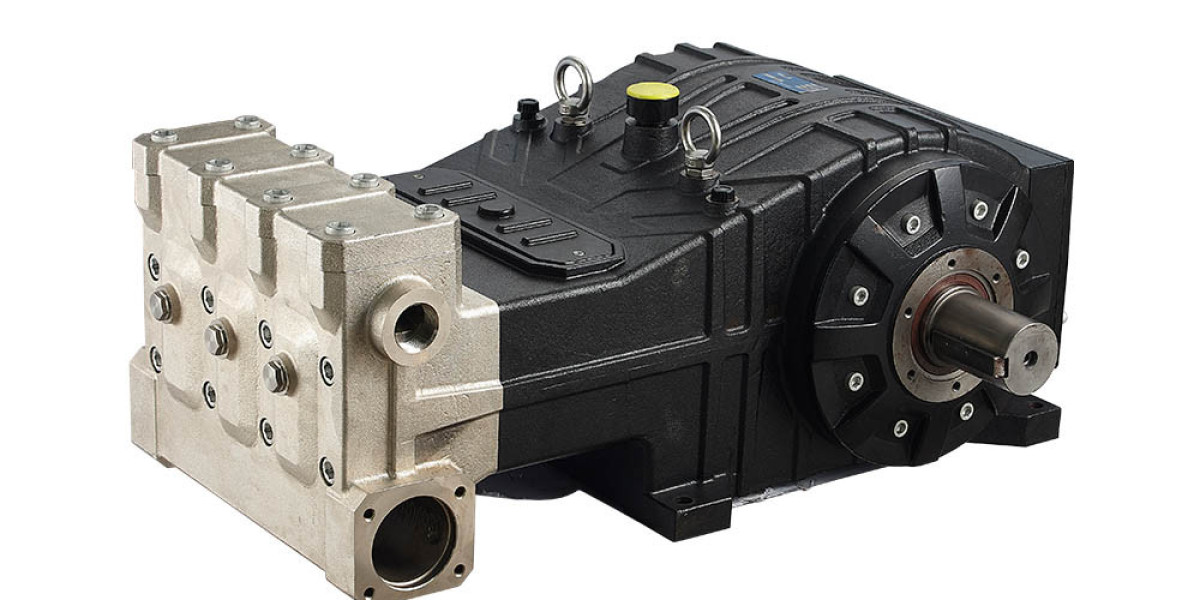

In the demanding world of industrial fluid handling, where generating extreme force from a liquid stream is a necessity, the high pressure plunger pump stands as a reliable and powerful solution. This type of positive displacement pump is engineered to convert mechanical energy into hydraulic energy with exceptional efficiency, capable of producing discharge pressures that can reach thousands of pounds per square inch (PSI) or even tens of thousands. The defining component of this pump is its plunger—a solid, cylindrical piston that moves with a reciprocating motion within a precision-machined chamber. Unlike piston pumps that use seals on the moving part, the plunger is typically smooth and relies on tightly packed seals stationary in the pump body. This design is fundamental to achieving the robust performance required for applications like water jet cutting, chemical injection, and hydraulic pressure testing, where consistent, intense pressure is non-negotiable.
The operational cycle of a high pressure plunger pump is a precise, repeating sequence. The plunger is driven by a crankshaft or cam mechanism, pulling back during the suction stroke. This retraction expands the volume of the fluid chamber, creating a vacuum that opens the inlet valve and draws fluid in. As the drive cycle reverses, the plunger is pushed forward on the discharge stroke, dramatically reducing the chamber volume. Since liquids are nearly incompressible, this action rapidly increases the pressure of the trapped fluid. Once the pressure exceeds that of the discharge line, it forces the outlet valve open, propelling a fixed volume, or "shot," of fluid into the system at high force. The linear, reciprocating action of multiple plungers, often phased around a common drive shaft, smooths out the flow to create a more consistent output than a single plunger could achieve alone.
The ability of these pumps to withstand and generate tremendous pressure relies on specialized construction. The fluid end of the pump, containing the plungers and valve assemblies, is typically made from high-strength, corrosion-resistant alloys like hardened stainless steel or ceramics. The plungers themselves are often manufactured from advanced materials such as polished tungsten carbide or ceramic-coated steel to resist wear and abrasion. The seals that contain the pressure around each moving plunger are critical; they are designed as multi-material packings that can handle intense friction and pressure without leaking. The power end, which houses the crankshaft, bearings, and gears, is built to manage the substantial reactive forces generated by the plungers working against the fluid pressure, ensuring stable and reliable mechanical drive.
Key performance parameters define a high pressure plunger pump. The maximum discharge pressure is the primary rating, dictated by the strength of the fluid end components and the power of the drive. Flow rate is determined by the diameter of the plungers, their stroke length, and the speed (RPM) of the drive. Since it is a positive displacement pump, the flow is relatively constant regardless of discharge pressure (assuming constant speed and no slippage). The efficiency of a well-maintained plunger pump can be high, as very little of the displaced fluid volume is lost to internal leakage. These pumps are often characterized by their ruggedness and ability to handle a wide range of fluids, including clean water, viscous oils, and aggressive chemicals, provided the wetted materials are compatible.
The high pressure plunger pump is a masterclass in applying fundamental mechanical principles to solve a challenging industrial problem. Its design, centered on the robust reciprocating action of one or more plungers, provides a direct and effective method for generating immense hydraulic force. From powering industrial cleaning systems to enabling precise material processing, the capabilities of this pump are integral to numerous high-tech and heavy-industry processes. The continuous evolution of materials for plungers and seals pushes the boundaries of achievable pressure and durability, ensuring that the high pressure plunger pump remains a critical and evolving tool for harnessing the power of fluids under extreme conditions.








